



How to Choose the Right Ice Sled for Heavy Load Transportation on Ice?
Introduction
Transporting heavy loads across frozen lakes, snow-covered plains, or industrial ice surfaces demands specialized equipment engineered for strength, balance, and reliability. Choosing the right Ice Sled is not only about moving cargo efficiently, but also about ensuring long-term safety, minimizing resistance, and protecting both operators and goods. In demanding environments where temperatures drop well below freezing, material performance, structural design, and load distribution become critical decision factors.
Based on decades of manufacturing experience, Ningbo Meitai Sports Co.,Ltd. focuses on developing durable solutions for cold-region transportation. From recreational applications to professional and industrial use, our understanding of real-world ice conditions helps customers select products that perform consistently over time. This guide explains how to evaluate design, materials, load capacity, and operational needs when selecting an Ice Sled for heavy load transportation on ice.
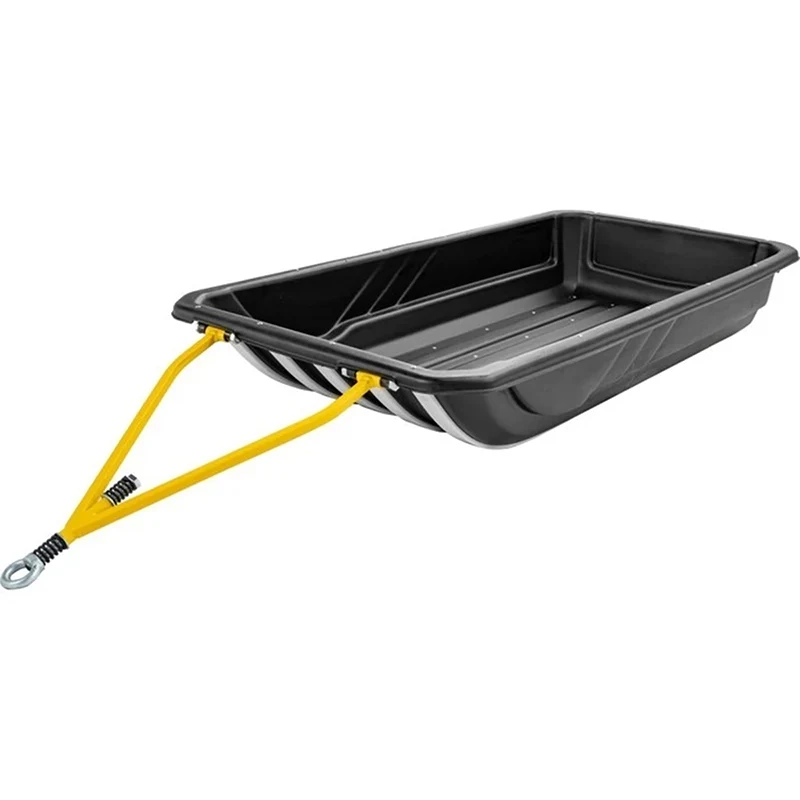
Table of Contents
- What Is an Ice Sled and How Is It Used for Heavy Loads?
- Why Does Structural Design Matter for Heavy Load Ice Transport?
- How Do Materials Affect Strength and Durability on Ice?
- How Should Load Capacity and Size Be Evaluated?
- Why Manufacturing Capability and Quality Control Matter?
- Summary and Practical Recommendations
- FAQ
What Is an Ice Sled and How Is It Used for Heavy Loads?
An Ice Sled is a specialized transport platform designed to glide smoothly over ice and snow surfaces while carrying substantial weight. Unlike wheeled carts or conventional trolleys that struggle with low friction and uneven terrain, Ice Sleds are engineered to distribute load evenly and maintain stability, reducing the risk of tipping or sudden stops. Their low-friction runners allow operators to move heavy cargo across frozen lakes, snow-covered plains, industrial ice surfaces, and expedition areas with minimal effort. In heavy load transportation, both safety and efficiency depend on the sled’s structural integrity, material durability, and ergonomic design.
At Ningbo Meitai Sports Co.,Ltd., our Ice Sleds are developed through decades of field experience and rigorous factory testing. Our factory combines real-world observations with advanced material science to deliver sleds that perform reliably in cold environments. Our approach ensures that operators encounter predictable glide, reduced fatigue, and optimal load control, even when handling industrial-grade equipment or high-volume supplies.
Key Applications of Ice Sleds for Heavy Loads
- Industrial material transport on frozen construction sites or logistics yards.
- Ice fishing equipment hauling over lakes and rivers.
- Emergency response and rescue operations requiring rapid movement of heavy equipment.
- Outdoor expeditions and research stations in Arctic or sub-Arctic conditions.
- Winter tourism operations, including guided sled tours with cargo transport.
- Military or defense logistics in snowbound terrains where conventional vehicles are impractical.
Design Features That Enhance Ice Sled Usage
- Wide Base and Low Center of Gravity: Distributes weight evenly, preventing tipping under heavy loads.
- Reinforced Runners: Designed to cut through ice with minimal resistance while supporting high weight capacities.
- Integrated Tow Points: Allow safe attachment to snowmobiles, ATVs, or human-powered towing systems.
- Modular Decks: Enable customization for different cargo sizes, facilitating multiple transport scenarios.
- Surface Texture Optimization: Reduces friction while maintaining stability on uneven ice surfaces.
Material and Environmental Considerations
Selecting the appropriate material for an Ice Sled is critical. Our factory emphasizes polymers and reinforced composites that retain strength and flexibility in extremely low temperatures. Unlike standard plastics that can crack or become brittle, high-density polymers used in our Ice Sleds maintain consistent glide and resist abrasion from ice contact. This material strategy ensures long-term performance, even under repeated heavy load cycles. Additionally, sleds must be resistant to moisture absorption, UV exposure from reflected sunlight on ice, and sudden temperature fluctuations that can weaken ordinary materials.
Operational Guidelines for Heavy Load Transport
- Assess ice thickness and surface condition before loading heavy cargo.
- Distribute weight evenly across the sled to avoid bending or tipping.
- Use tow systems suitable for the total weight, ensuring controlled speed.
- Inspect the sled regularly for runner wear, cracks, or joint loosening.
- Store sleds in dry, temperature-stable environments to preserve material properties.
- Train operators on proper loading techniques and safety precautions to minimize accidents.
By combining advanced materials, thoughtful design, and operational best practices, Ningbo Meitai Sports Co.,Ltd. ensures that our Ice Sleds remain reliable across demanding scenarios. Our factory continuously tests sleds under simulated industrial loads and extreme weather conditions to validate safety and performance standards. This combination of engineering, material science, and practical usage experience guarantees that our customers achieve efficient, safe, and long-lasting heavy load transportation on ice.
Why Does Structural Design Matter for Heavy Load Ice Transport?
The structural design of an Ice Sled determines how effectively it handles heavy loads, resists deformation, and maintains smooth glide over ice. When transporting industrial equipment, construction materials, or expedition supplies, a poorly designed sled can flex, warp, or fail under pressure, leading to increased friction, damage to cargo, or operator risk. Understanding the relationship between design geometry, load distribution, and material properties is critical for achieving reliable performance.
At Ningbo Meitai Sports Co.,Ltd., our factory prioritizes design elements that ensure consistent operation under heavy-duty conditions. Each sled model undergoes rigorous structural analysis, load testing, and real-world trials to confirm resilience. We focus on achieving an optimal balance between rigidity, weight, and glide efficiency, ensuring the sled can carry substantial loads without compromising stability.
Key Structural Design Features for Heavy Load Ice Sleds
- Reinforced Sidewalls: Strengthen the sled frame to prevent bending under heavy loads.
- Wide Base Geometry: Ensures even weight distribution across runners, reducing localized stress points.
- Optimized Runner Shape: Reduces friction, improves maneuverability, and stabilizes movement over uneven ice.
- Load-bearing Crossbeams: Reinforce the deck to handle concentrated cargo weight without sagging.
- Integrated Towing Points: Designed for secure attachment and controlled pulling by humans or vehicles.
- Modular Deck Panels: Allow flexible cargo placement, increasing operational versatility.
- Protective Edges: Reduce damage from contact with ice, rocks, or other obstacles.
Impact of Structural Design on Performance
Proper structural design directly affects safety, efficiency, and long-term durability. A well-designed sled can glide smoothly over frozen surfaces, resist bending or cracking under heavy loads, and maintain stability when turning or stopping. Our factory employs finite element analysis (FEA) to simulate stress distribution across the sled under maximum load scenarios. These simulations allow us to reinforce critical stress points, optimize runner geometry, and ensure that our Ice Sleds remain operational season after season.
Practical Examples and Use Cases
- Transporting 300 kg of construction materials across frozen worksites: a sled with reinforced crossbeams and wide base prevents tipping and reduces drag.
- Carrying ice fishing equipment across a frozen lake: optimized runners improve glide, while integrated tow points allow safe human or ATV towing.
- Emergency rescue operations: modular deck panels and reinforced frames enable quick loading of medical supplies or stretchers.
- Winter expedition logistics: protective edges and durable materials ensure long-term usability in sub-zero temperatures.
By prioritizing these structural considerations, Ningbo Meitai Sports Co.,Ltd. ensures that our Ice Sleds provide predictable, safe, and high-performance solutions for heavy load transportation in all cold-environment conditions. Our factory’s design expertise translates into sleds that resist wear, support maximum load capacities, and maintain smooth operation across diverse ice surfaces.
How Do Materials Affect Strength and Durability on Ice?
Material selection is a critical factor that determines the long-term performance, safety, and efficiency of an Ice Sled when transporting heavy loads on ice. Materials used in sled construction must withstand extreme cold, repeated mechanical stress, abrasion, and moisture exposure without compromising structural integrity. At Ningbo Meitai Sports Co.,Ltd., our factory has focused on selecting advanced high-density polymers, reinforced composites, and cold-resistant alloys that maintain strength and flexibility in sub-zero temperatures.
Material Properties and Their Impact
- Cold Resistance: Materials must retain flexibility and resist cracking in temperatures that may drop below minus 30 degrees Celsius. Low-quality plastics can become brittle, causing sudden failure under load.
- Load-Bearing Capacity: Strong materials ensure that the sled supports its maximum rated load without bending or warping, maintaining safety and operational efficiency.
- Surface Glide: Materials with low friction reduce drag, making it easier to move heavy loads and reducing operator fatigue over long distances.
- Impact Resistance: The ability to absorb shocks from uneven ice or obstacles is crucial for preserving structural integrity and protecting cargo.
- Durability: Repeated exposure to ice, snow, and UV reflection from sunlight requires materials that resist wear and maintain performance over multiple seasons.
- Moisture Resistance: Materials that absorb water can weaken or expand, affecting sled stability and glide.
Common Materials Used in Ice Sled Construction
| Material Type | Cold Resistance | Load Capacity | Wear Resistance | Recommended Application |
| High-Density Polymer | Excellent | High | High | Medium to Heavy Load, Recreational & Industrial |
| Reinforced Composite | Excellent | Very High | Very High | Heavy Load, Professional & Industrial Use |
| Standard Plastic | Moderate | Medium | Medium | Light Load or Short-Term Use |
| Aluminum Alloy | Good | High | High | Specialized Heavy Duty Industrial Applications |
Practical Implications of Material Choice
- High-density polymer ensures flexibility and glide efficiency for ice fishing or moderate cargo transport.
- Reinforced composites allow industrial and emergency transport where maximum weight and durability are required.
- Aluminum alloys provide excellent strength but may increase overall sled weight, impacting manual towing efforts.
- Material combination strategies, such as polymer decks with composite reinforcements, optimize both durability and maneuverability.
- Our factory conducts cold chamber testing and abrasion simulations to ensure materials meet heavy load requirements.
- Proper material selection reduces maintenance costs and extends operational life of the sled significantly.
In conclusion, material selection directly affects the sled's ability to carry heavy loads, glide efficiently, and maintain safety. At Ningbo Meitai Sports Co.,Ltd., our factory emphasizes testing and quality control to ensure that each Ice Sled delivers reliable performance even under the most challenging ice conditions.
How Should Load Capacity and Size Be Evaluated?
Evaluating load capacity and size is crucial for ensuring that an Ice Sled performs safely and efficiently when transporting heavy loads. Load capacity is not simply the maximum weight number; it involves understanding how weight distribution, sled dimensions, base geometry, and cargo placement impact stability and glide. Overloading a sled or choosing an undersized model can result in structural failure, increased friction, or unsafe conditions.
Key Factors for Evaluating Load Capacity
- Maximum Load Rating: Always choose a sled with a load rating that exceeds the intended cargo weight to provide a safety margin.
- Weight Distribution: Properly distributing weight prevents bending of runners and maintains smooth glide. Our factory recommends evenly loading cargo from front to back and side to side.
- Base Width and Runner Design: A wider base improves stability, while optimized runner geometry reduces ice resistance.
- Deck Size: Large decks allow for flexible cargo placement but may increase sled weight, requiring careful consideration of towing effort.
- Center of Gravity: Keeping heavy items close to the sled’s center reduces tipping risk and enhances control.
Ice Sled Size and Model Recommendations
| Model | Recommended Load | Deck Size | Application |
| Medium Duty | Up to 150 kg | 120x60 cm | Recreational, light industrial use |
| Heavy Duty | 150-300 kg | 150x80 cm | Industrial, professional outdoor use |
| Extra Heavy Duty | 300+ kg | 180x100 cm | Specialized heavy load transport |
Practical Guidelines for Load and Size Selection
- Always verify ice thickness and surface integrity before loading maximum weight.
- Use load distribution methods, such as securing heavier items centrally and lighter items peripherally.
- Choose sled size according to towing method: human-powered, ATV, snowmobile, or vehicle attachment.
- Consider operational distance: larger decks increase capacity but may increase friction and operator effort.
- Test small loads before full heavy load deployment to confirm glide behavior and stability.
- Our factory provides guidance charts and load distribution recommendations to ensure optimal sled performance.
By carefully evaluating load capacity and size, users can ensure safety, efficiency, and long-term durability of Ice Sleds. Ningbo Meitai Sports Co.,Ltd. emphasizes these criteria in product design and customer guidance to optimize heavy load transport across ice surfaces.
Why Manufacturing Capability and Quality Control Matter?
Manufacturing capability and rigorous quality control are key determinants of the long-term reliability and performance of Ice Sleds. Even the best design and materials can fail if production is inconsistent, tolerances are not maintained, or inspection protocols are weak. At Ningbo Meitai Sports Co.,Ltd., our factory combines advanced machinery, precise engineering, and stringent inspection procedures to ensure consistent product quality for every Ice Sled produced.
Manufacturing Processes That Ensure Reliability
- Precision Molding: Ensures uniform deck thickness, accurate runner dimensions, and consistent material density.
- Reinforcement Integration: Crossbeams, sidewalls, and runner supports are systematically installed to meet design specifications.
- Cold Condition Testing: Simulated ice and sub-zero testing verify sled performance under extreme temperatures and load stress.
- Material Verification: All polymers and composites are tested for density, flexibility, and abrasion resistance before use.
- Assembly Standards: Tight tolerances and alignment checks prevent deformation and uneven load distribution.
Quality Control Measures
- Visual inspection for cracks, surface defects, or warping.
- Dimensional verification using calibrated measurement tools.
- Load testing at multiple weight levels to confirm stability and structural integrity.
- Surface friction testing to ensure optimal glide on ice.
- Documentation and traceability for each sled to guarantee accountability.
Benefits of Strong Manufacturing and QC
- Consistent performance under repeated heavy load transport.
- Reduced risk of structural failure in extreme cold.
- Extended operational life of sleds, lowering replacement costs.
- Confidence for industrial and professional users in demanding environments.
- Ability to customize sleds with varying deck sizes, materials, and reinforcement levels without compromising quality.
In conclusion, manufacturing capability and quality control directly impact the reliability, safety, and durability of Ice Sleds. Ningbo Meitai Sports Co.,Ltd. ensures that our factory maintains high standards at every production stage, providing customers with dependable heavy load transportation solutions that last for years.
Summary and Practical Recommendations
Choosing the right Ice Sled for heavy load transportation on ice requires careful evaluation of design, materials, capacity, and manufacturing quality. When these elements align, users benefit from smoother movement, improved safety, and longer service life.
Ningbo Meitai Sports Co.,Ltd. combines practical field knowledge with controlled production processes, ensuring our Ice Sled products meet demanding cold-environment requirements. For buyers seeking reliability and efficiency, selecting a well-engineered solution is a long-term investment.
Contact our team to discuss your application needs and explore customized solutions that support safe and efficient heavy load transportation on ice.

FAQ
Q1: How to Choose the Right Ice Sled for Heavy Load Transportation on Ice?
The right choice depends on load weight, surface conditions, material performance in cold temperatures, and structural design.
Q2: How to Choose the Right Ice Sled for Heavy Load Transportation on Ice in industrial use?
Industrial applications require reinforced structures, higher load ratings, and proven material durability under repeated stress.
Q3: How to Choose the Right Ice Sled for Heavy Load Transportation on Ice in extreme cold?
Cold-resistant materials and tested polymers ensure flexibility and strength even at very low temperatures.
Q4: How to Choose the Right Ice Sled for Heavy Load Transportation on Ice for long distances?
Low-friction base design and balanced geometry reduce pulling effort over extended distances.
Q5: How to Choose the Right Ice Sled for Heavy Load Transportation on Ice safely?
Adequate load capacity, stable towing points, and controlled glide behavior are essential for safety.
Q6: How to Choose the Right Ice Sled for Heavy Load Transportation on Ice with customization needs?
Manufacturers with strong factory capabilities can adjust size, thickness, and reinforcement to match specific requirements.
Q7: How to Choose the Right Ice Sled for Heavy Load Transportation on Ice for long-term use?
Durable materials, reinforced design, and consistent quality control ensure long service life.
Q8: How to Choose the Right Ice Sled for Heavy Load Transportation on Ice from a reliable supplier?
Selecting an experienced manufacturer with proven quality systems improves reliability and performance assurance.
Send Inquiry
-
E-mail
X
We use cookies to offer you a better browsing experience, analyze site traffic and personalize content. By using this site, you agree to our use of cookies.
Privacy Policy