



What Safety Factors Should Be Considered When Using Ice Sleds on Ice Fields?
Introduction
Ice-based sports and recreational activities have gained strong popularity across North America and Europe, especially in winter training, outdoor exploration, and professional athletic preparation. Among these activities, the Ice Sled has become an essential piece of equipment for training, transport, and competitive use on frozen surfaces. However, operating an Ice Sled on ice fields involves inherent risks related to surface conditions, equipment design, user behavior, and environmental factors.
From the perspective of long-term product development and real-world application experience, safety is never a single feature but a systematic outcome of design, materials, manufacturing standards, and correct usage. At Ningbo Meitai Sports Co.,Ltd., our focus has always been on integrating structural safety, durability, and user control into every Ice Sled produced in our factory. This article provides a comprehensive analysis of the critical safety factors that should be considered when using Ice Sled on ice fields, combining practical field insights with detailed product parameters.

Table of Contents
- What Environmental Conditions Affect Ice Sled Safety on Ice Fields?
- Why Does Ice Sled Structural Design Matter for User Protection?
- How Do Material Selection and Manufacturing Standards Improve Safety?
- What Operational and User Practices Reduce Ice Field Risks?
- Summary
- FAQ
What Environmental Conditions Affect Ice Sled Safety on Ice Fields?
When operating an Ice Sled on ice fields, environmental conditions are the most unpredictable and influential safety variables. Unlike controlled indoor rinks, natural or semi-natural ice fields are shaped by weather patterns, temperature shifts, and continuous surface changes. Understanding how these factors interact with Ice Sled performance is essential for reducing operational risks and ensuring stable movement.
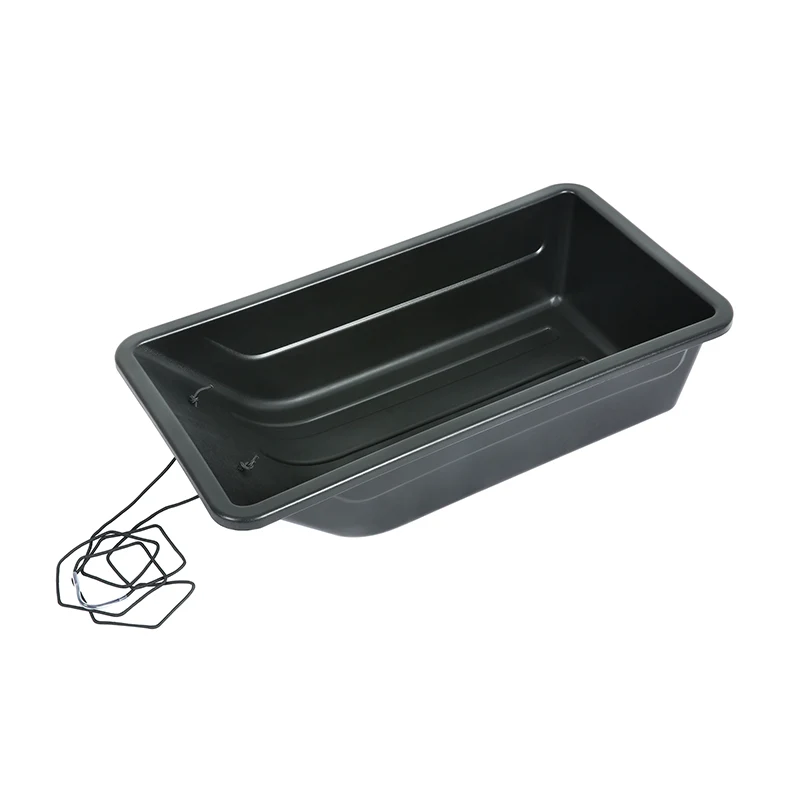
One of the most critical environmental factors is ice thickness and structural consistency. Ice that appears visually solid may still contain weak zones caused by uneven freezing, underwater currents, or pressure variations. Areas near shorelines, reeds, or submerged objects often freeze unevenly, increasing the risk of cracking under load. When an Ice Sled moves across such surfaces, weight distribution becomes a decisive factor. Proper load-bearing assessment must account for both static weight and dynamic force generated during motion.
Temperature fluctuation is another major influence on ice safety. At extremely low temperatures, ice becomes harder and more brittle, which increases glide speed but reduces surface shock absorption. This can lead to longer stopping distances and higher impact forces during sudden maneuvers. Conversely, during warmer conditions or transitional weather, ice surfaces soften and may develop slush layers. These zones increase friction unpredictably, causing sudden deceleration or loss of directional control for the Ice Sled.
From extensive field observations, our experience shows that daily temperature variation can significantly alter ice performance even within a single operating session. Morning ice conditions may differ entirely from afternoon conditions. For this reason, Ice Sled safety depends not only on initial surface inspection but also on continuous environmental monitoring throughout use.
Wind exposure is another often underestimated environmental factor. Strong crosswinds can affect balance, especially when Ice Sled is used at higher speeds or on wide-open ice fields. Wind-driven snow accumulation may also conceal cracks, pressure ridges, or uneven ice thickness. In open environments, sudden gusts can shift body position, making stability and grip strength critical.
Snow cover further complicates safety assessment. While a thin snow layer may appear harmless, it can mask surface hazards such as fractures, refrozen melt lines, or rough ice textures. Snow also changes friction characteristics, which directly affects Ice Sled braking distance and steering response. Operators should treat snow-covered ice as a separate risk category rather than assuming uniform conditions beneath.
Natural obstacles must also be considered. Frozen debris, ice ridges, refrozen footprints, or pressure cracks can all interfere with runner contact. When an Ice Sled encounters these irregularities at speed, sudden jolts or directional shifts may occur. Consistent runner geometry and stable frame design help mitigate these risks, but environmental awareness remains essential.
Visibility conditions play a direct role in environmental safety. Low light, snowfall, fog, or glare from reflective ice surfaces reduce reaction time. Poor visibility limits the ability to detect hazards early, increasing reliance on predictable Ice Sled handling and user preparedness. In such conditions, conservative speed and increased spacing become essential safety practices.
At Ningbo Meitai Sports Co.,Ltd., environmental adaptability is a core consideration in Ice Sled design and testing. Our factory conducts performance evaluations under varied ice textures, temperature ranges, and surface conditions. This approach ensures that our Ice Sled products maintain stable glide characteristics and predictable handling even as environmental variables change.
In summary, environmental conditions influence Ice Sled safety through ice thickness, temperature behavior, wind exposure, snow cover, surface obstacles, and visibility. No single factor operates in isolation. Effective risk management requires continuous assessment of the ice field and selection of equipment designed to perform reliably under these changing conditions. When environmental awareness is combined with well-engineered Ice Sled construction, overall safety on ice fields improves significantly.
Why Does Ice Sled Structural Design Matter for User Protection?
Structural design is one of the most decisive safety factors when using an Ice Sled on ice fields. While environmental awareness helps users anticipate risks, the sled’s structural configuration determines how effectively those risks are absorbed, managed, or amplified during real-world operation. A well-engineered structure protects the user by maintaining stability, distributing load evenly, and responding predictably to surface irregularities.
One of the primary structural considerations is overall frame geometry. An Ice Sled with a balanced and symmetrical frame minimizes uneven force distribution during movement. When weight is evenly supported across the sled, the likelihood of sudden tipping or lateral drift is significantly reduced. This is especially important on natural ice fields, where surfaces are rarely perfectly flat.
Center-of-gravity control plays a crucial role in user protection. A lower center of gravity improves stability during acceleration, deceleration, and directional changes. When the user’s weight is positioned closer to the ice surface, the Ice Sled becomes less sensitive to external forces such as wind, uneven ice, or sudden shifts in body posture. Our long-term field data shows that sleds designed with optimized height profiles deliver noticeably better control in unpredictable environments.
Runner configuration is another structural element directly linked to safety. The length, spacing, and alignment of runners influence glide behavior and steering response. Longer runners typically provide greater directional stability, while precise parallel alignment ensures consistent contact with the ice. Misaligned runners can cause unexpected pulling to one side, increasing the risk of loss of control. For this reason, runner alignment accuracy is treated as a core safety parameter in our factory production process.
Load-bearing capacity is also fundamental to Ice Sled structural safety. Each sled must be engineered to withstand not only the user’s weight but also dynamic forces generated during motion. Sudden stops, turns, or impacts with uneven ice can multiply stress on the frame. A structurally reinforced design absorbs these forces without permanent deformation, preserving predictable handling characteristics over time.
Key structural safety features commonly integrated into high-quality Ice Sled designs include:
- Reinforced main frame sections to resist bending and torsion
- Cross-bracing elements that improve lateral rigidity
- Optimized runner-to-frame connection points for load transfer
- Rounded structural transitions to reduce stress concentration
User interface elements are another often overlooked aspect of structural safety. Handholds, seating areas, and support bars must be positioned to allow secure grip and stable posture, even when wearing thick gloves. Poorly positioned grips can lead to loss of balance during sudden movements. Structural ergonomics ensure that the user remains properly aligned with the Ice Sled throughout operation.
Below is an example of structural parameters typically applied to Ice Sled models developed by Ningbo Meitai Sports Co.,Ltd. for ice field use:
| Overall Frame Length | 1200 to 1600 mm |
| Runner Spacing | 450 to 550 mm |
| Frame Load Rating | 120 to 150 kg |
| Runner Material Thickness | 3.0 to 4.0 mm |
| Center-of-Gravity Height | Optimized for low-profile stability |
Manufacturing precision further determines whether a structural design performs as intended. Even small deviations in welding angles, runner alignment, or frame symmetry can compromise safety. In our factory, each Ice Sled undergoes dimensional inspection and load testing to ensure consistency between design specifications and finished products.
Another important consideration is long-term structural integrity. Ice field environments expose equipment to repeated thermal cycling, moisture, and mechanical stress. A structurally sound Ice Sled maintains its geometry over time, preventing gradual performance degradation that could otherwise lead to unsafe behavior.
At Ningbo Meitai Sports Co.,Ltd., structural safety is not treated as a single feature but as an integrated system. Frame design, runner configuration, ergonomic positioning, and manufacturing accuracy are developed together to support reliable performance. This approach ensures that our Ice Sled products provide consistent protection across varied ice field conditions.
In conclusion, Ice Sled structural design directly influences user protection by controlling stability, load distribution, and response to external forces. When structure is engineered with precision and reinforced for real-world conditions, it becomes a critical safety asset rather than a hidden risk. Combined with proper environmental awareness, robust structural design forms the backbone of safe Ice Sled operation on ice fields.
How Do Material Selection and Manufacturing Standards Improve Ice Sled Safety?
Material selection and manufacturing standards form the hidden backbone of Ice Sled safety. While users may primarily notice handling performance or surface stability, the true reliability of an Ice Sled is determined long before it reaches the ice field. The materials chosen and the way they are processed directly influence structural strength, temperature resistance, corrosion behavior, and long-term durability.
Ice field environments impose unique mechanical and environmental stresses on equipment. Extremely low temperatures, constant moisture exposure, and repeated thermal cycling can weaken unsuitable materials over time. Metals that perform well in normal climates may become brittle in freezing conditions, increasing the risk of cracking or sudden structural failure. For this reason, Ice Sled materials must retain mechanical integrity and elasticity at low temperatures.
Runner materials are particularly critical to safety. The runners serve as the sole contact point between the Ice Sled and the ice surface, directly affecting glide stability and directional control. High-quality steel alloys with proven low-temperature toughness are commonly used to prevent microfractures and deformation. Surface hardness must be carefully balanced to ensure wear resistance without compromising impact absorption when encountering uneven ice.
Frame materials also contribute significantly to safety performance. A strong yet properly tempered frame absorbs dynamic forces generated during acceleration, braking, and turning. Overly rigid materials may transfer excessive vibration to the user, while overly flexible materials may compromise stability. The optimal balance ensures controlled movement and predictable response under varying ice conditions.
Corrosion resistance is another essential material consideration. Ice fields often involve melting and refreezing cycles that expose Ice Sled components to moisture repeatedly. Without adequate surface protection, corrosion can gradually weaken structural joints, fasteners, and runners. Anti-corrosion treatments extend service life and maintain consistent performance across seasons.
At Ningbo Meitai Sports Co.,Ltd., material selection is guided by extensive low-temperature performance testing. Our Ice Sled components are evaluated for strength retention, impact resistance, and surface durability under simulated ice field conditions. This approach ensures that materials perform reliably not only when new but also after extended use.
Manufacturing standards are equally important in translating material potential into real-world safety. Even the best materials can fail if manufacturing precision is inadequate. Welding quality, dimensional accuracy, and assembly consistency directly influence structural integrity. Inconsistent weld penetration or misaligned components can introduce weak points that compromise safety under stress.
Key manufacturing processes that influence Ice Sled safety include:
- Precision welding to ensure uniform joint strength
- Controlled heat treatment to maintain material properties
- Accurate runner alignment during assembly
- Surface finishing to reduce friction irregularities
- Strict quality inspection at each production stage
Dimensional tolerance control is particularly critical. Small deviations in frame geometry or runner spacing may not be visually obvious but can significantly alter handling behavior on ice. Precise manufacturing ensures that each Ice Sled behaves consistently, allowing users to develop predictable control techniques and reducing the likelihood of unexpected movement.
Below is an example of material and manufacturing parameters commonly applied in Ice Sled production at Ningbo Meitai Sports Co.,Ltd.:
| Runner Material | Cold-resistant steel alloy |
| Frame Material | High-strength carbon steel |
| Surface Treatment | Anti-corrosion coating |
| Welding Method | Reinforced precision welding |
| Dimensional Tolerance | Strictly controlled during assembly |
Quality control systems play a decisive role in maintaining manufacturing consistency. Each Ice Sled produced in our factory undergoes multiple inspection stages, including visual checks, dimensional measurement, and load simulation. These procedures ensure that every unit meets predefined safety and performance criteria before delivery.
Long-term safety is also influenced by manufacturing repeatability. When production processes are standardized and monitored, performance remains consistent across batches. This consistency is especially important for professional organizations or distributors who require reliable product behavior across multiple Ice Sled units.
Another critical factor is traceability. Clear documentation of material sources, processing methods, and inspection records allows for continuous improvement and rapid response to performance feedback. At Ningbo Meitai Sports Co.,Ltd., this traceability supports ongoing optimization of Ice Sled safety and durability.
In conclusion, material selection and manufacturing standards are inseparable elements of Ice Sled safety. Cold-resistant materials, corrosion protection, precision welding, and strict quality control together create equipment capable of performing reliably in demanding ice field environments. When materials and manufacturing are treated as strategic safety components rather than cost variables, the result is an Ice Sled that delivers stable, predictable, and secure operation over its entire service life.
What Operational and User Practices Reduce Ice Field Risks When Using Ice Sled?
Even when environmental conditions are carefully evaluated and Ice Sled equipment is engineered to high safety standards, operational behavior remains a decisive factor in overall risk control. User practices determine how effectively the Ice Sled interacts with the ice field and how well potential hazards are anticipated and managed. Safe operation is not a single action but a continuous process that begins before entering the ice and continues throughout use.
Pre-use inspection is the first and most fundamental operational practice. Before every session, users should visually and physically inspect the Ice Sled for any signs of wear, deformation, or loosened components. Runners should be checked for alignment, surface damage, and secure attachment to the frame. Even minor irregularities can affect glide behavior and directional control on ice fields.
Our experience shows that consistent inspection routines significantly reduce unexpected performance issues. In our factory guidelines, inspection is treated as a standard operational step rather than an optional precaution. This approach helps users identify potential safety risks before they escalate during use.
Proper positioning and posture also play a critical role in Ice Sled safety. Users should maintain a stable and centered body position that aligns with the sled’s center of gravity. Sudden shifts in weight, especially during turns or changes in speed, can destabilize the Ice Sled and increase the risk of tipping. Maintaining balanced posture improves responsiveness and allows smoother adaptation to surface irregularities.
Speed management is another essential operational factor. Ice fields offer low-friction surfaces that can quickly amplify speed. While higher speed may be desirable in certain controlled scenarios, it significantly reduces reaction time and increases stopping distance. On unfamiliar or variable ice fields, conservative speed selection is a key safety practice. Controlled acceleration and gradual deceleration help maintain predictable handling characteristics.
Directional control should always be smooth and deliberate. Abrupt steering inputs or sudden directional changes can overwhelm the Ice Sled’s contact points, leading to loss of traction. Gradual turns allow the runners to maintain consistent ice contact, preserving stability. This is particularly important when transitioning between different ice textures or navigating snow-covered areas.
Environmental awareness must be maintained continuously during operation. Ice conditions can change rapidly due to temperature variation, wind, or increased traffic. Users should remain alert to visual cues such as surface discoloration, cracking sounds, or changes in glide resistance. Adjusting speed and direction in response to these signals reduces exposure to emerging hazards.
Protective equipment also contributes to safer Ice Sled operation. While the sled itself provides structural stability, appropriate personal gear adds an additional safety layer. Insulated gloves improve grip strength, while protective clothing helps maintain body control in cold conditions. Proper footwear ensures secure contact when mounting or dismounting the Ice Sled on slippery surfaces.
Key operational safety practices for Ice Sled use include:
- Conducting thorough pre-use equipment inspection
- Maintaining balanced posture and stable body alignment
- Managing speed based on surface familiarity and conditions
- Using smooth and controlled steering movements
- Continuously monitoring environmental changes
- Using appropriate personal protective equipment
Group operation introduces additional safety considerations. When multiple Ice Sled units are used on the same ice field, maintaining safe spacing is essential. Close proximity increases collision risk, especially during sudden stops or turns. Clear communication and predictable movement patterns help prevent accidents in shared environments.
Training and experience also influence operational safety. Familiarity with Ice Sled handling characteristics allows users to respond instinctively to surface changes. Regular practice improves coordination and confidence, reducing hesitation or overcorrection. From our long-term cooperation with professional users, structured training is one of the most effective methods for reducing operational risk.
At Ningbo Meitai Sports Co.,Ltd., operational safety considerations are integrated into Ice Sled design through ergonomic features that support correct posture and intuitive control. Our factory collaborates with experienced users to refine handling characteristics that align with natural movement patterns, reducing the likelihood of misuse.
In conclusion, operational and user practices are essential to minimizing risks when using Ice Sled on ice fields. Thorough inspection, controlled movement, environmental awareness, and disciplined behavior transform equipment safety features into real-world protection. When high-quality Ice Sled construction is combined with responsible operation, overall safety performance improves significantly, supporting reliable and confident use in demanding ice environments.
Summary
Safety when using Ice Sled on ice fields is the result of multiple interconnected factors. Environmental awareness, structural design, material quality, manufacturing precision, and correct user practices all contribute to reducing risks. From product development to real-world application, each detail matters. At Ningbo Meitai Sports Co.,Ltd., our commitment to safety is reflected in every Ice Sled produced in our factory. By integrating robust design, reliable materials, and practical field insights, we deliver products that support stable, controlled, and secure use in demanding ice environments.
For organizations and individuals seeking dependable Ice Sled solutions with a strong focus on safety and long-term performance, our team is ready to provide detailed product consultation, technical specifications, and customized manufacturing support. Contact our factory to explore how our experience can support your next project.
FAQ
Q1: What safety factors should be considered when using Ice Sled on natural ice fields?
Key factors include ice thickness verification, surface uniformity, temperature stability, equipment structural integrity, and user control practices.
Q2: How does Ice Sled design influence stability on uneven ice?
A low center of gravity, properly aligned runners, and balanced frame geometry help maintain directional control and reduce tipping risks.
Q3: Why is material choice critical for Ice Sled safety?
Cold-resistant and corrosion-resistant materials maintain strength and glide consistency in freezing and wet conditions, reducing failure risks.
Q4: How often should Ice Sled equipment be inspected for safety?
Inspection is recommended before every use, focusing on runners, fasteners, and frame alignment to identify potential issues early.
Q5: What role does user behavior play in Ice Sled safety?
Controlled speed, situational awareness, proper training, and adherence to environmental conditions significantly reduce accident probability.
Send Inquiry
-
E-mail
X
We use cookies to offer you a better browsing experience, analyze site traffic and personalize content. By using this site, you agree to our use of cookies.
Privacy Policy